 Furrow & Feather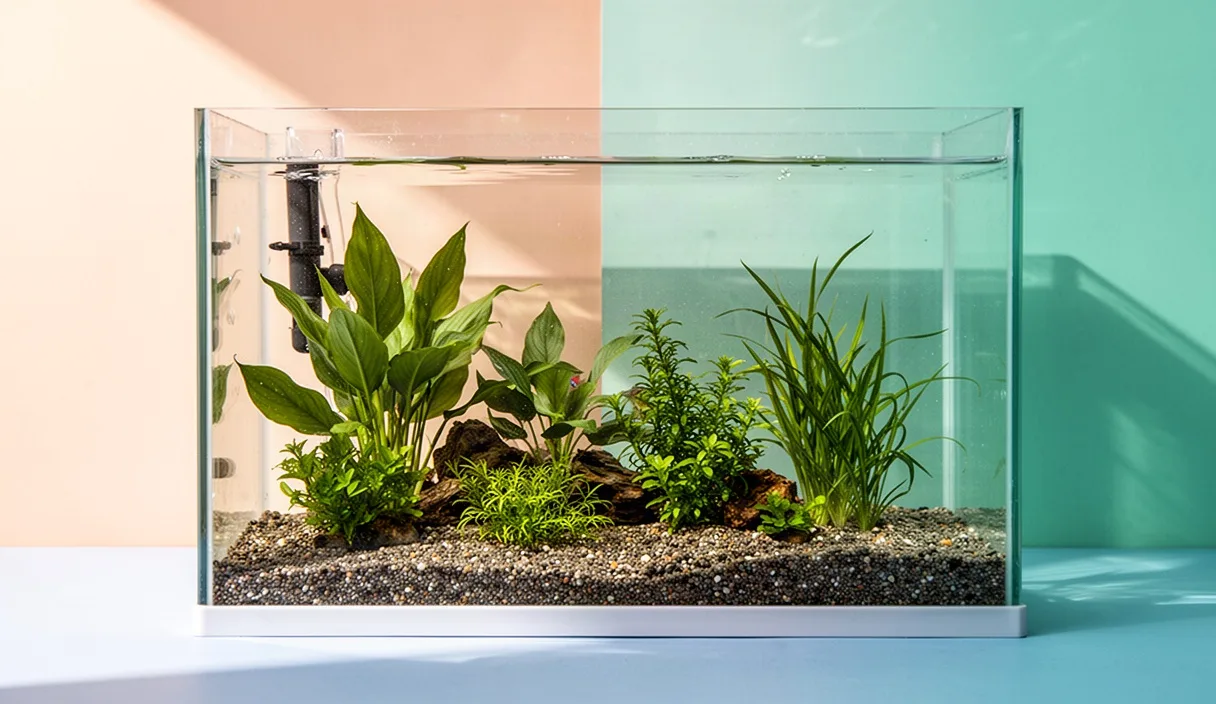
A new aquarium looks deceptively simple: a glass box, some water, a few fish. What is actually happening inside that box is a small, closed ecosystem that has to process waste, maintain stable chemistry and support living organisms with no outside intervention beyond what the owner provides. Get the biology wrong and the visible symptoms, cloudy water, gasping fish, algae blooms, show up only after real damage has already been done.
This guide is aimed at someone setting up a first freshwater tank, not a reef system or a large custom build. The principles below apply whether the eventual stock is a betta, a handful of tetras or a community tank of livebearers. None of this replaces advice from an experienced local fish keeper or, if fish begin showing signs of illness, an aquatic veterinarian; but the setup mistakes described here account for a large share of the problems beginners run into in the first two months.
Why an aquarium is a biological system, not decoration
A stocked aquarium is a miniature closed-loop waste treatment system. Fish produce ammonia continuously, through respiration and through waste, and ammonia is toxic even at low concentrations. In an outdoor pond or river, ammonia disperses into a huge volume of water and is processed by an established, complex microbial community across a large surface area. In a 20-gallon glass box, there is no dilution to speak of, and the microbial community has to be built from scratch and given time to establish itself before it can keep pace with waste production.
This is the central fact that most decorating-first approaches ignore. The gravel, the plants, the ornaments and the lighting matter for the fish's welfare and for the tank's appearance, but they do nothing to process ammonia. That job belongs to bacteria colonies living mostly in the filter media and, to a lesser extent, on gravel and decor surfaces. A tank can look finished and still be biologically empty.
Treating the aquarium as a system rather than a display case changes the order of setup decisions. Filtration and cycling come before fish selection. Water testing comes before restocking. And any change to the tank, a new filter, a substrate swap, a large water change, is evaluated for its effect on the bacterial population before it is evaluated for how it looks.
Choosing tank size and filtration before fish
Tank size should be chosen based on the adult size and social needs of the fish being kept, not on available shelf space or budget alone. A common beginner error is buying a 5 or 10-gallon tank because it is inexpensive, then trying to stock species, such as goldfish or larger cichlids, that need considerably more swimming room and produce more waste than such a small volume can safely buffer. As a rough starting point for most beginners, a 20-gallon long tank (roughly 76 liters) offers a workable margin for error: more water volume means slower, more forgiving swings in temperature and chemistry.
Filtration needs to be sized to the tank, not guessed at. Filters are typically rated by gallons-per-hour (GPH) turnover, and a reasonable beginner target is a filter rated for four to six times the tank's volume in GPH. A 20-gallon tank, for example, does well with a filter rated between 80 and 120 GPH. Three main filtration types are commonly available to first-time owners:
- Hang-on-back (HOB) power filters: affordable, easy to maintain, widely available, suitable for most beginner tanks up to about 55 gallons.
- Sponge filters: gentle flow, excellent biological surface area, good for fry tanks or species that dislike current, but they require an air pump.
- Canister filters: higher capacity and quieter, generally better suited to tanks above 40 gallons or heavily stocked setups, at a higher upfront cost.
A heater and a thermometer are not optional for most tropical species; a submersible heater rated for the tank's volume, paired with an adjustable thermostat, keeps temperature in the range most tropical freshwater fish need, generally 74 to 80°F (23 to 27°C). A cheap stick-on thermometer costs little and removes the guesswork.
The nitrogen cycle explained simply
The nitrogen cycle is the process by which beneficial bacteria convert fish waste into progressively less toxic compounds. It happens in three broad stages, and understanding the sequence explains why a new tank cannot be fully stocked on day one.
- Ammonia (NH3/NH4+) production: fish waste, uneaten food and decaying plant matter release ammonia, which is toxic to fish even at concentrations as low as 0.25 to 0.5 ppm.
- Nitrite (NO2-) conversion: a bacteria species, primarily Nitrosomonas, consumes ammonia and produces nitrite, which is also toxic to fish, sometimes more so than ammonia depending on the species.
- Nitrate (NO3-) conversion: a second bacteria species, primarily Nitrobacter, converts nitrite into nitrate, which is far less toxic and is removed primarily through routine water changes.
Establishing this bacterial population from nothing, a process usually called "cycling," takes roughly four to six weeks in most home setups, though it can run longer depending on temperature and starting conditions. Many beginners choose to fishless-cycle: dosing the tank with a source of ammonia (either a pure ammonia solution or a small amount of fish food left to decay) and tracking ammonia, nitrite and nitrate levels with a test kit until the tank can process a dose of 2 ppm ammonia down to zero within 24 hours, with nitrite also reading zero. Only at that point is the biological filter considered mature enough to support a full fish load.
An alternative some retailers still suggest, adding a few hardy fish and cycling "with" them, exposes those fish to real ammonia and nitrite toxicity and is generally discouraged by most experienced keepers today in favor of the fishless method, which avoids putting any animal at risk during the process.
Water testing basics for beginners
A liquid-reagent test kit that measures ammonia, nitrite, nitrate and pH is a reasonable minimum investment for anyone setting up their first tank; strip tests are faster but generally less accurate for ammonia and nitrite, the two parameters that matter most during cycling. Testing should happen daily during the initial cycle and then weekly, or before and after any water change, once the tank is established.
| Parameter | Safe range (established tank) | Action if outside range |
|---|---|---|
| Ammonia (NH3) | 0 ppm | Water change 25-50%, check filter, reduce feeding |
| Nitrite (NO2-) | 0 ppm | Water change, add aquarium salt if species-appropriate, retest daily |
| Nitrate (NO3-) | Under 20-40 ppm | Water change, review feeding and stocking levels |
| pH | Stable, species-appropriate (often 6.5-7.5) | Avoid rapid swings; adjust gradually if needed |
Consistency matters more than hitting a perfect number. A pH of 7.4 that stays stable week to week is generally less stressful for fish than a pH of 7.0 that swings between 6.4 and 7.8 depending on when the tank was last topped up. Sudden changes in any parameter are usually more dangerous than a steady, slightly imperfect baseline.
Common early mistakes and how to avoid them
Several patterns show up repeatedly in first-time setups, and most are avoidable with a bit of patience before the tank is stocked.
- Adding all fish at once: even in a fully cycled tank, introducing a large number of fish simultaneously can temporarily overwhelm the bacterial colony. Adding fish gradually, a few at a time over two to three weeks, gives the bacteria population time to scale up.
- Overfeeding: uneaten food decomposes and adds directly to the ammonia load. A general guideline is feeding only what fish consume within two to three minutes, once or twice daily.
- Overcleaning the filter: rinsing filter media under tap water, or replacing cartridges too frequently, kills off the beneficial bacteria living there. Rinsing gently in old tank water, and doing so only when flow is visibly reduced, preserves the colony.
- Skipping the dechlorinator: tap water almost always contains chlorine or chloramine, both harmful to fish and to the beneficial bacteria colony. A water conditioner added at every water change, following the bottle's dosing instructions, neutralizes this.
- Impulse stocking: buying fish based on appearance rather than adult size, temperament and compatibility leads to overcrowding or aggression later. Researching a species' adult size and social needs before purchase avoids this.
A pre-launch checklist before adding fish
Before any fish goes into the tank, it is worth confirming each of the following, since correcting a problem before stocking is considerably easier than correcting it afterward.
- Tank has been running, filter and heater included, for at least four to six weeks with a completed fishless cycle: ammonia and nitrite both test at 0 ppm after a 2 ppm ammonia dose within 24 hours.
- Heater is holding a stable temperature within the target range for the intended species, confirmed with an independent thermometer over several days.
- Filter is rated appropriately for the tank's volume and has been running continuously, not switched off overnight or during water changes.
- A liquid test kit is on hand, along with a water conditioner and a gravel vacuum or siphon for routine water changes.
- Substrate, decor and any live plants have been rinsed and are appropriate for the intended species; sharp-edged decor, for instance, is a poor choice for fish with delicate fins.
- Stocking plan has been checked against adult fish size, temperament and the tank's actual gallon capacity, ideally cross-referenced against more than one source or an experienced local aquarist.
Once these boxes are checked, fish can be introduced gradually rather than all at once, with water tested again 24 and 48 hours after each addition. A tank set up this way rarely offers dramatic surprises in the first few weeks, which, for a beginner, is precisely the point.