 Furrow & Feather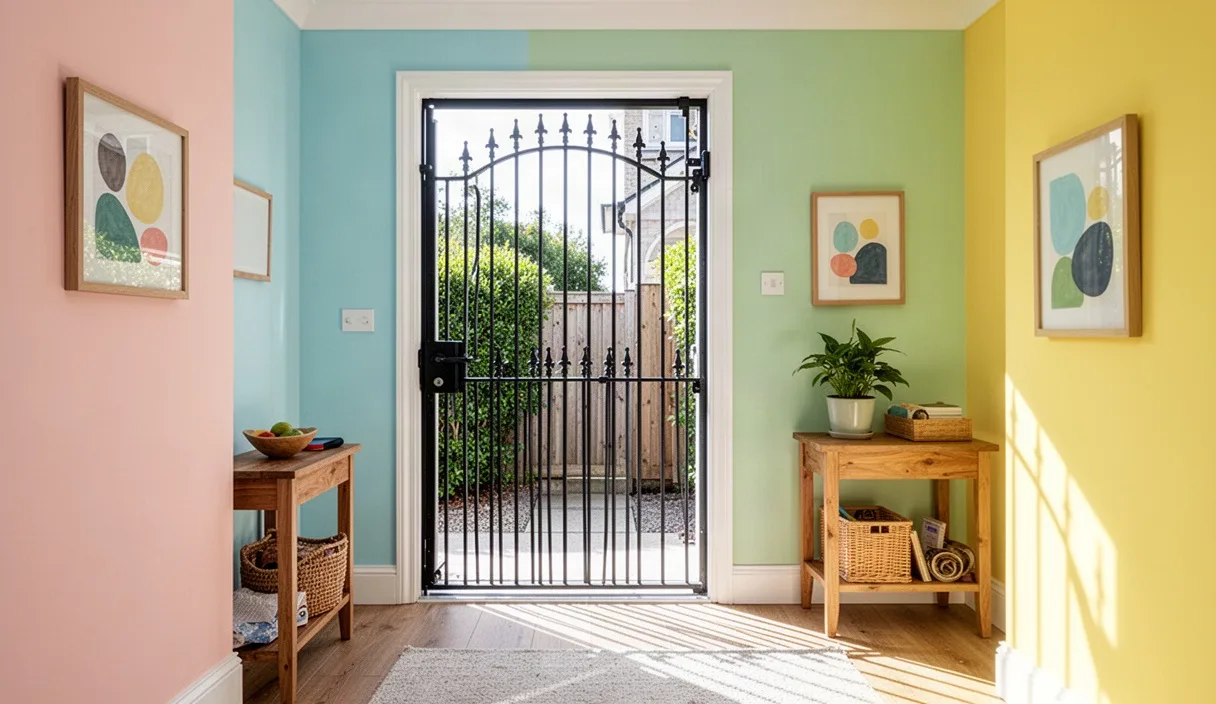
Home visits occupy an odd place in the adoption process: dreaded by applicants, defended by shelters, and rarely explained in any detail by either party. Most people imagine a clipboard-wielding inspector hunting for dust on the skirting boards, which is not, in practice, what happens. The visit is closer to a conversation conducted while walking through a house than an inspection in the regulatory sense, and the criteria involved are narrower and more practical than most applicants expect.
Understanding what is actually being assessed, and what is not, tends to reduce the anxiety around the process considerably. This article sets out the categories that most reputable shelters and rescue organisations look at, why each one matters to the animal's welfare rather than to some abstract standard of tidiness, and how an applicant might reasonably prepare without redecorating a house for the benefit of a single forty-minute appointment.
Why shelters conduct home visits at all
The practice began, in large part, as a response to animals being returned within weeks of adoption because the environment simply did not suit them: a dog with high prey drive rehomed into a flat with two free-roaming rabbits, or a nervous cat placed in a household with three dogs and no separate room to retreat to. A home visit is, at its core, an attempt to catch mismatches before they happen rather than after.
Shelters also use the visit to verify information supplied on the application form, not out of suspicion but because written forms tend to smooth over details that only become obvious in person. An applicant might describe a garden as "secure" without realising that a six-foot fence with a gap under the gate is not secure for a terrier with a talent for digging.
There is also a liability dimension that shelters rarely advertise but privately care about a great deal. An organisation that places an animal into a household with an obviously unsafe balcony or an unfenced pool, without ever having looked, exposes itself to reputational and sometimes legal consequences if something goes wrong. The home visit is partly a documented step in a due diligence process, not merely a courtesy.
Safety checks: fencing, escape routes and hazards
For dog adoptions in particular, fencing is usually the single most scrutinised physical feature. Assessors typically look for height appropriate to the breed or size category (a four-foot fence may be entirely adequate for a bulldog and useless for a border collie), gaps at ground level large enough for a determined animal to squeeze through, and gate latches that could be nudged open rather than requiring deliberate action.
Beyond the perimeter, assessors tend to walk the interior with an eye for specific hazards rather than general cleanliness:
- Exposed electrical cords in areas a puppy or kitten would have access to
- Balconies or windows without secure screens, particularly relevant for cats above ground floor level
- Unsecured chemicals, medications or rodent bait stored at floor level
- Swimming pools or ponds without fencing or covers
- Stairwells or gaps that could trap a small animal
None of this requires a home to resemble a padded cell. A visible cleaning supply cupboard with a latch, or a pool with a simple gate, is generally sufficient. What assessors are checking for is evidence that the applicant has thought about the animal's likely behaviour, not that every conceivable risk has been eliminated. A frayed cord behind a sofa that no animal could reach is a different matter from one draped across a kitchen floor.
Household composition and existing pets
Shelters generally want to meet, or at least hear detailed accounts of, every human and animal who will share the home. This is less about approving or vetoing individual family members and more about identifying compatibility issues before they cause distress to an animal that has often already been through one disruption.
With existing pets, some organisations request a supervised meet-and-greet on neutral territory before the home visit even takes place, particularly for dog-to-dog introductions. During the visit itself, an assessor will often ask how current pets react to visitors, whether they have any history of resource guarding, and how the household intends to manage the first few weeks of introduction. A rescue is less interested in whether pets will bond immediately and more interested in whether the applicant has a realistic plan if they do not.
Children in the household prompt a different set of questions, usually about supervision rather than the children themselves: who will be responsible for feeding and exercise on school days, what happens during a child's nap time if a dog is anxious, whether the family has experience with animals reacting defensively to fast movement or loud noise. Shelters working with breeds or individual animals known to be sensitive around small children will sometimes flag this as a genuine limiting factor rather than a box to tick.
Typical composition questions by species
| Situation | Common question asked |
|---|---|
| Existing dog in home | How does your dog respond to unfamiliar dogs on lead versus off lead? |
| Existing cat in home | Does your cat have access to a room where it can avoid a new animal entirely? |
| Young children present | Who supervises interactions during the first two to three weeks? |
| Elderly relative in household | Is there a mobility concern that affects walking or lifting the animal? |
Questions about routine, schedule and long-term plans
Physical space matters less to most shelters than daily rhythm, and this is often where applicants are surprised by the direction of the conversation. An assessor is likely to ask how many hours a day the animal would typically be left alone, who is home during standard working hours, and what the plan is for exercise or enrichment on days when the schedule is unpredictable.
Cost is addressed more directly than applicants sometimes expect. A shelter may ask whether the household has budgeted for routine veterinary care, and separately, whether there is any contingency for an unexpected illness or injury requiring several hundred pounds or dollars in treatment. This is not a financial means test in the sense of requiring proof of income, but a prompt to think concretely about a cost that surprises many first-time owners.
Long-term questions tend to focus on change rather than commitment in the abstract: what would happen to the animal if the applicant moved to a rental property that restricted pets, if a job required relocation, or if a household member developed an allergy. Shelters are not expecting guarantees, since none can be given honestly, but they are listening for whether the applicant has considered these scenarios at all versus treating the adoption as permanent by default with no fallback thinking.
What assessors are not looking for
A persistent misconception is that home visits function like inspections for cleanliness or interior design, and this deters some otherwise well-suited applicants from ever submitting an application. In practice, reputable assessors are trained to ignore clutter, cosmetic wear, or a house that is simply lived-in, provided none of it constitutes an actual hazard.
Income level and home ownership status are, on their own, rarely disqualifying. A tenant with a landlord's written pet permission is generally treated the same as a homeowner. Similarly, a modest apartment is not automatically ruled out for a dog, provided the applicant can describe a realistic exercise plan; shelters are increasingly aware that a large house with a garden is no substitute for a commitment to daily walks.
Assessors are also, generally, not evaluating taste or lifestyle choices unrelated to animal welfare, such as whether the applicant smokes outdoors, keeps unconventional hours as a shift worker, or has decor an inspector might personally find unappealing. The relevant question is always whether a specific feature of the home or routine creates a risk or a mismatch for this particular animal, not whether the household matches some idealised template of pet ownership.
Common mistakes
Applicants sometimes attempt a last-minute overhaul, buying new furniture or borrowing a friend's tidier living room for the appointment, which experienced assessors tend to notice and which rarely changes the outcome either way. A more useful use of the same hour is fixing an actual gap in a fence or moving a cleaning product off the floor.
Another frequent error is treating the visit as adversarial and answering questions defensively rather than honestly. Assessors are generally more concerned by an applicant who insists nothing could ever go wrong than by one who admits uncertainty about, for instance, how a resident cat will react and describes a sensible plan for gradual introduction.
Some applicants also over-prepare verbally, reciting research rather than answering the specific question asked, which can make it harder for the assessor to judge genuine day-to-day thinking. A direct answer about the actual household routine is generally more useful to both parties than a summary of a training book.
Preparing without overhauling your home
A reasonable amount of preparation focuses on the items most likely to come up rather than a general deep clean. Walking the garden perimeter for gaps, checking that a gate latch cannot be nudged open, and confirming that any chemical storage has a functioning latch will address most of the physical checklist in under an hour.
It is worth writing down, beforehand, a simple answer to the questions about daily schedule and budget, since these are the ones applicants most often fumble not from lack of planning but from being asked to articulate it on the spot. A brief note on who is home at what times, and roughly what has been set aside for routine and emergency veterinary costs, tends to cover the ground efficiently.
If there is a genuine uncertainty, such as how an existing pet with a history of anxiety might react, it is generally more productive to raise this directly with the shelter beforehand rather than waiting for the visit to reveal it. Many organisations can suggest a professional trainer or behaviourist consultation as part of a phased introduction plan, and raising the issue early is treated far more favourably than having it surface unprompted during the appointment itself. For any specific behavioural or health concern involving an existing pet, consulting a qualified veterinarian or certified animal behaviourist beforehand is a reasonable and often welcomed step, rather than something to hide from the shelter conducting the assessment.