 Furrow & Feather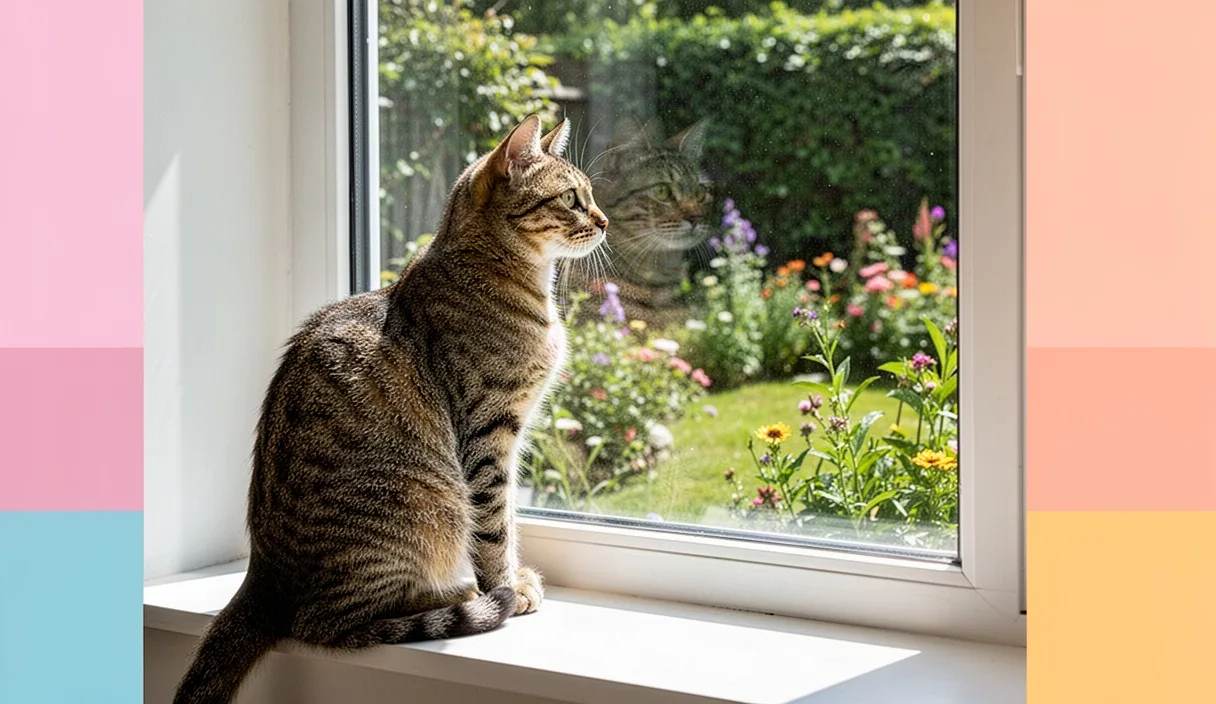
The indoor-versus-outdoor question tends to arrive in conversation already decided, usually by whoever is speaking loudest. Outdoor advocates point to a cat's need to express natural behavior; indoor advocates point to lifespan statistics and traffic accidents. Both sides are working from real evidence, which is precisely why the debate resists a tidy conclusion. The honest position is that the right answer depends on the individual animal, the specific geography, and a household's capacity to compensate for whatever access it chooses to withhold.
This article does not attempt to settle the argument, because it cannot be settled in the abstract. Instead, it lays out the concrete risks and limitations attached to each arrangement, along with a middle path that many owners overlook, so that a decision can be made with the actual trade-offs in view rather than with slogans.
Framing the decision without the usual absolutes
Population-level statistics are frequently cited as though they settle individual cases. A commonly referenced figure suggests indoor cats live several years longer on average than cats with unrestricted outdoor access, but averages flatten enormous variation. A cat living beside a rural lane with light traffic faces different odds than one living near a six-lane arterial road, and a cat with a calm temperament faces different odds than one prone to roaming several miles from home.
Behavioral needs matter as much as safety statistics, and they cut in the other direction. Cats are built to hunt, patrol territory, and scent-mark a range that, for an unrestricted domestic cat, can extend anywhere from a few hundred square meters to several hectares depending on sex, neuter status, and local cat density. Denying that entirely without substitution can produce boredom-related problems: overeating, destructive scratching, or redirected aggression toward housemates.
The useful question is not "indoor or outdoor" but "what does this cat need to express, and how much of that can be provided safely given where I live." That reframing is what the rest of this piece works through.
Risks specific to full outdoor access
Traffic is the single largest cause of death among free-roaming cats in most surveyed suburban and urban areas, and the risk is not confined to obviously busy roads. Cats are frequently struck on residential streets precisely because owners assume low traffic volume equals low danger, when in fact a car passing at 40 km/h with little warning is enough.
Beyond vehicles, outdoor cats face a cluster of risks that rarely make it into casual conversation:
- Territorial fights with other cats, which can transmit feline immunodeficiency virus (FIV) through bite wounds and often go unnoticed until an abscess forms days later.
- Predation from coyotes, foxes, large birds of prey, or off-leash dogs, depending on region; this risk rises sharply at dawn and dusk.
- Toxin exposure from antifreeze, rodenticide-laced prey, or garden chemicals used by neighbors, none of which the owner controls.
- digestive balance load, including fleas, ticks, and intestinal worms picked up from soil or hunted rodents, which typically means more frequent veterinary digestive balance control than an indoor cat requires.
- Disappearance, whether through misadventure, accidental shutting-in by a neighbor, or theft, which is more common with visibly pedigreed breeds.
There is also an ecological dimension worth naming plainly: free-roaming domestic cats are documented predators of small birds, reptiles, and mammals, and in areas with vulnerable native wildlife populations, outdoor access carries a cost that extends beyond the cat's own household. Anyone weighing outdoor access in a wildlife-sensitive area should factor this in rather than treat it as someone else's concern.
Limitations and needs of indoor-only living
Indoor-only cats avoid the risks above almost entirely, but the arrangement is not, and it is not automatically kinder. Without deliberate compensation, indoor cats are more prone to obesity, since calorie intake often stays constant while activity drops. Veterinary weight clinics regularly report indoor cats carrying 15 to 20 percent above ideal body weight, which in turn raises the likelihood of metabolic balance and joint strain later in life.
Boredom expresses itself in specific, recognizable ways: excessive sleeping beyond the usual 12 to 16 hours a day, scratching furniture rather than a designated post, over-grooming to the point of bald patches, or a marked increase in nighttime activity because daytime stimulation was insufficient. These are not signs that a cat is simply "an indoor type"; they are signs that the indoor environment is under-furnished for its needs.
A reasonably enriched indoor setup usually includes several elements together rather than any single one in isolation:
- Vertical space, such as shelving or a cat tree at least 1.5 meters tall, since height gives a sense of security and territory in a limited footprint.
- Rotating toys, changed every one to two weeks, because novelty matters more to cats than toy quantity.
- At least one daily session of interactive play, ideally 10 to 15 minutes with a wand toy that mimics prey movement.
- Window access with a secure perch, which functions as a low-effort form of environmental stimulation.
- Puzzle feeders for a portion of daily food, which slows eating and adds mental work to an otherwise passive activity.
None of this eliminates the cat's territorial instincts, but it narrows the gap between what an indoor cat is offered and what it would otherwise seek outside on its own.
Enclosed outdoor spaces as a middle option
A "catio", an enclosed outdoor structure attached to a window, door, or wall, gives a cat sun, air, and a view without the traffic and predation risks of open roaming. Sizes vary considerably: some are little more than a mesh box roughly 1 meter by 1 meter attached to a windowsill, while others are walk-in structures of 10 square meters or more with shelving, tunnels connecting to the house, and planted grasses safe for chewing.
Construction does not need to be elaborate to be effective. A functional catio typically requires:
- A frame of treated wood or galvanized metal, sized to the available space.
- Weld mesh or hardware cloth with openings no larger than 2.5 cm, since standard chicken wire is too weak and too easily bent open by a determined cat or a curious raccoon.
- A secure, lockable access point connecting to the house, often a repurposed window or a cat-sized door cut into an exterior wall.
- At least one elevated platform and one shaded area, so the cat can choose sun or shelter.
- A roof or top mesh cover, since owls and large hawks have been known to take unenclosed outdoor cats in some regions.
The main limitation is territory size: even a generous catio cannot replicate the exploratory range of open roaming, so it works best as a supplement to indoor enrichment rather than a total substitute for behavioral stimulation. It is, however, a meaningfully safer compromise than either extreme, and it is the option most veterinary behaviorists mention favorably when asked directly.
Leash and harness training for supervised outings
Harness walking gives a cat outdoor access under direct human control, and it works better for some individual cats than others; kittens generally adapt faster than adult cats set in indoor routines, though there are plenty of exceptions. A well-fitted H-style or vest harness is preferable to a collar-only setup, since cats can back out of a collar in a way that is much harder with a properly adjusted harness across the chest and shoulders.
A gradual approach produces better results than forcing the process:
- Let the cat sniff and walk around the harness indoors, unworn, for two or three days.
- Put the harness on indoors for short periods, five minutes at a time, pairing it with a treat the cat particularly likes.
- Attach the leash indoors and let the cat drag it around under supervision for another few days, so the sensation of resistance is not new outside.
- Carry the cat to a quiet outdoor spot, low foot traffic, no dogs nearby, and set it down rather than walking it in from a distance.
- Keep the first few outdoor sessions to five or ten minutes, letting the cat set the pace rather than leading it.
Not every cat accepts this. Signs that a particular cat is a poor candidate include flattened ears and crouching that does not ease after several sessions, repeated attempts to bolt out of the harness, or visible stress panting. In those cases, persisting is not a kindness, and a catio or enriched indoor setup is the more reasonable fallback. A veterinarian or a qualified feline behavior consultant can help assess whether a stressed reaction is temporary adjustment or a genuine mismatch.
Matching the decision to the individual cat and location
Temperament is a real variable, not a convenient excuse. A cat that startles at sudden noise, hides from visitors, or shows little interest in the window view is a poorer candidate for outdoor access, harnessed or otherwise, than a confident, exploratory cat. Age matters too: kittens under six months have less road sense and weaker recall, while cats over twelve years may have reduced mobility or sensory decline that makes open roaming riskier than it once was.
Location changes the calculation as much as temperament does. The table below summarizes how the balance tends to shift across a few common settings, though individual streets and neighborhoods vary.
| Setting | Primary risk | Generally reasonable option |
|---|---|---|
| Dense urban street, heavy traffic | Vehicle strikes, no safe roaming space | Indoor-only with strong enrichment, or catio if space allows |
| Quiet suburban cul-de-sac | Occasional traffic, other cats, wildlife predation | Catio, or supervised harness walks |
| Rural property, low traffic | Predators (coyotes, birds of prey), distance roamed | Supervised outdoor time, catio for unsupervised hours |
| Wildlife-sensitive area (native bird habitat) | Ecological impact on local species | Indoor-only or fully enclosed catio, minimizing free hunting |
Multi-cat households add another layer: two cats from the same litter often tolerate shared outdoor territory without conflict, while two cats introduced as adults may need separate access times to avoid territorial disputes even within a shared catio. Observing actual behavior over several weeks tells you more than any general rule.
Common mistakes
A few recurring errors show up across households making this decision. Assuming a quiet street is a safe street, without accounting for delivery vans, reversing cars, or seasonal traffic changes near schools. Building a catio without checking local mesh gauge and predator activity, which leaves gaps large enough for a determined raccoon or hawk-adjacent risk. Rushing harness training in a single session rather than over a week, which usually produces a cat that refuses the harness permanently rather than one that merely dislikes it today. And treating indoor confinement as inherently sufficient, without adding the daily play and vertical space that make it tolerable long-term.
Practical next steps
Start by assessing the specific street or property rather than the general reputation of the neighborhood: walk it at the times of day the cat would actually be out, and note traffic volume, loose dogs, and any wildlife signs. Then assess the cat honestly, using its actual reactions to novelty and noise rather than assumptions based on breed or age. If outdoor access seems reasonable, build toward it gradually, catio first if space and budget allow, harness training as a secondary or complementary option. If full indoor living is the safer choice for your situation, treat enrichment as a non-negotiable part of the arrangement rather than an optional extra. Where health, behavior, or safety questions remain unresolved, a veterinarian or a certified feline behaviorist can offer guidance suited to the individual cat, which is more reliable than any general rule offered here.